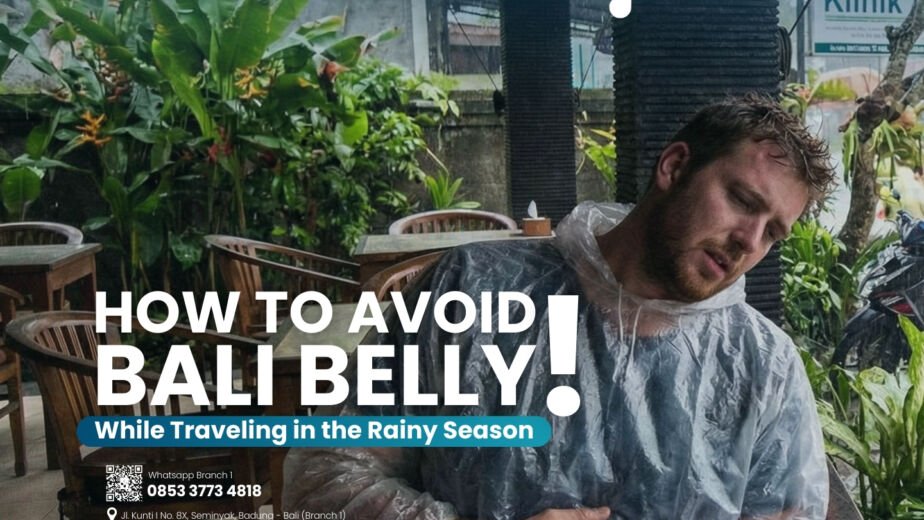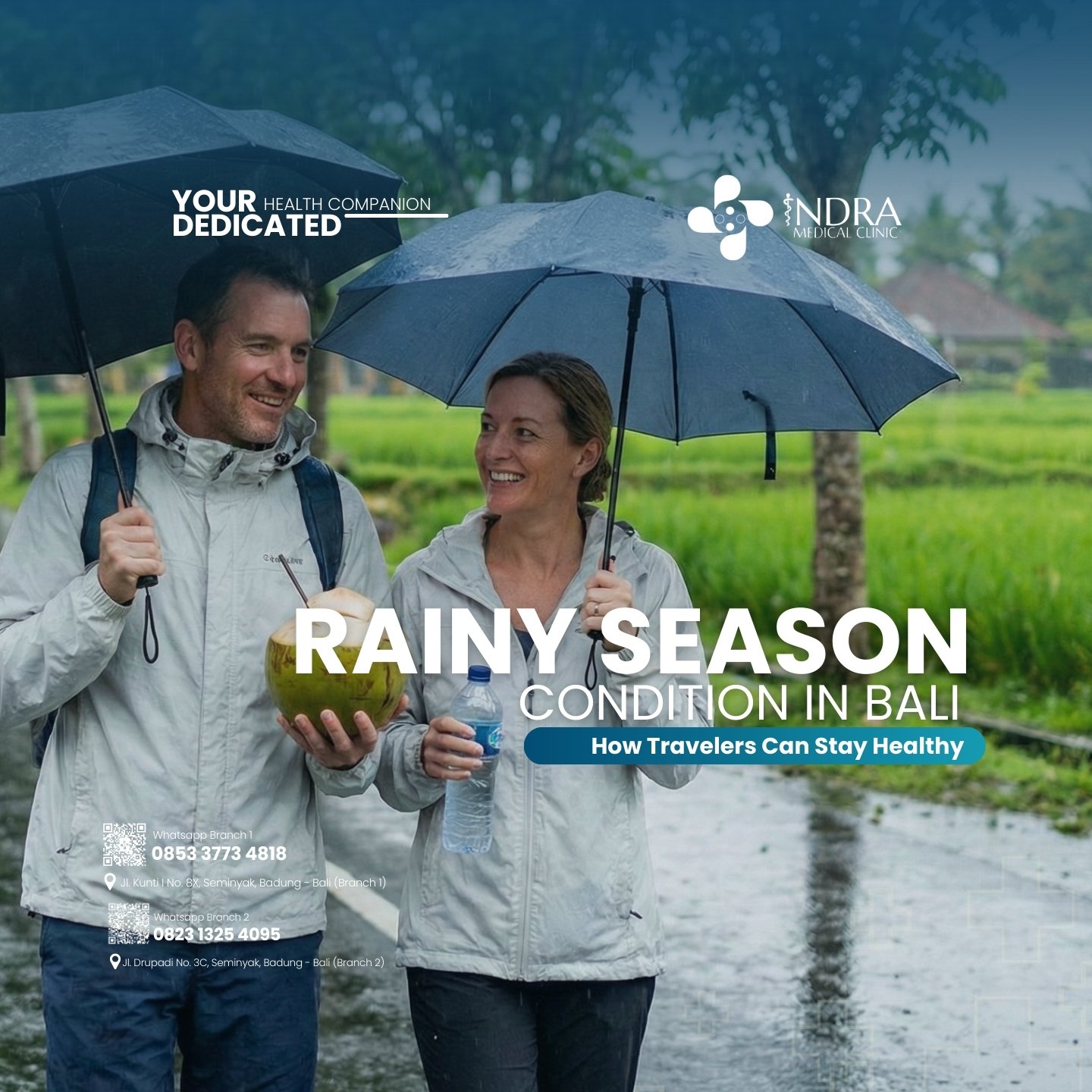
Bali’s rainy season brings cooler temperatures, greener landscapes, and fewer crowds—but it also introduces specific health challenges for travelers. Increased humidity, heavy rainfall, and occasional flooding can raise the risk of infections, dehydration, and travel-related injuries if proper precautions are not taken.
At Indra Medical Clinic, we regularly assist tourists and expatriates who experience health issues during the rainy months. This article provides practical, doctor-approved guidance to help travelers stay healthy and enjoy Bali safely during the wet season.
Understanding Bali’s Rainy Season and Health Risks
The rainy season in Bali typically involves:
High humidity
Sudden heavy downpours
Standing water in urban and rural areas
Increased mosquito activity
Disruptions to travel and access to healthcare
These conditions can contribute to a higher incidence of gastrointestinal illness, viral infections, mosquito-borne diseases, skin problems, and dehydration.
Common Health Problems Travelers Face During the Rainy Season
1. Gastrointestinal Illness (Traveler’s Diarrhea)
Rain can affect food handling, water quality, and sanitation systems, increasing the risk of stomach infections.
Prevention tips:
Drink only bottled or properly filtered water
Avoid ice unless from trusted sources
Eat freshly cooked, hot meals
Wash hands frequently or use hand sanitizer
Early treatment helps prevent dehydration and prolonged recovery.
2. Mosquito-Borne Diseases
Standing water after rainfall creates ideal breeding conditions for mosquitoes, increasing the risk of dengue fever.
Protect yourself by:
Using mosquito repellent daily
Wearing long sleeves and long pants when possible
Avoiding stagnant water areas
Using mosquito control indoors
Seek medical care promptly if you develop fever, severe body aches, or eye pain.
3. Respiratory and Viral Infections
Crowded indoor spaces, damp environments, and temperature changes can increase the spread of flu-like illnesses.
Watch for symptoms such as:
Fever
Cough or sore throat
Runny nose
Fatigue
Do not ignore persistent or worsening symptoms, especially if you have underlying medical conditions.
4. Skin Infections and Fungal Conditions
Prolonged moisture from rain and sweat can irritate the skin and increase the risk of bacterial or fungal infections.
Helpful tips:
Keep skin dry when possible
Change wet clothes promptly
Clean and cover minor cuts
Seek medical advice if redness or pain worsens
5. Accidents and Injuries
Slippery roads, reduced visibility, and flooded areas increase the risk of falls and motorbike accidents.
Safety advice:
Avoid riding through flooded roads
Use proper footwear
Delay travel during severe rain
Do not underestimate road conditions
When Should Travelers See a Doctor in Bali?
You should consult a medical professional if you experience:
Persistent diarrhea or vomiting
Fever lasting more than 24–48 hours
Severe weakness or dehydration
Worsening wounds or skin infections
Symptoms suggestive of dengue or other tropical infections
Early medical care often shortens recovery time and prevents complications.
Stay Prepared, Stay Healthy in Bali
Rainy season conditions do not have to disrupt your trip. With awareness, preventive habits, and early medical care when needed, travelers can significantly reduce health risks and enjoy Bali safely.
If you require medical assistance during your stay, Indra Medical Clinic is ready to support your health—rain or shine.
Simple precautions can prevent unnecessary illness and delays