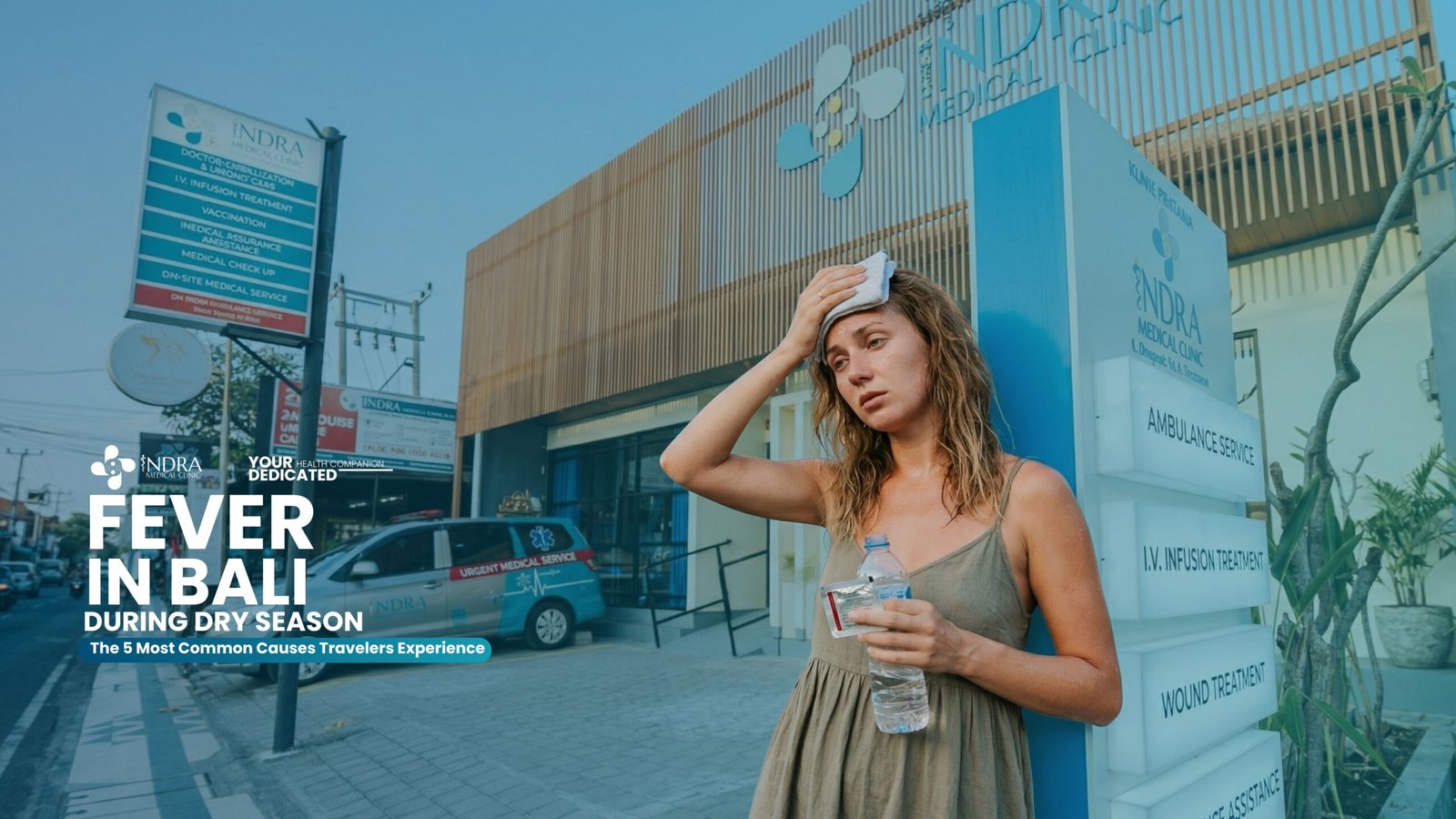
If you’re experiencing fever in Bali, even during the dry season, it should not be ignored. Many travelers assume illnesses are less likely when it’s sunny—but in reality, clinics still see a high number of patients who suddenly feel sick in Bali and don’t know what to do.
At Indra Medical Clinic Seminyak, we regularly treat international patients with fever-related conditions throughout the year—including the dry season.
Why Fever Still Happens in Bali During Dry Season
While mosquito populations may slightly decrease compared to rainy months, several risk factors remain:
- Ongoing exposure to mosquitoes (especially in urban and villa areas)
- Increased outdoor activity → dehydration and heat-related illness
- High tourism traffic → easier spread of viral infections
- Food hygiene variability → risk of gastrointestinal infections
In short: dry season does not mean zero risk.
The 5 Most Common Causes of Fever in Bali
1. Dengue Fever
Even during dry season, dengue remains one of the most important causes of fever in Bali.
- Aedes mosquitoes can still breed in small water containers
- Cases occur year-round in Bali
- Early symptoms can look mild but may worsen
Typical symptoms:
- Sudden high fever
- Severe headache (often behind the eyes)
- Muscle and joint pain
- Nausea or rash
⚠️ Key point: The “fever drop” phase can be misleading and dangerous.
👉 Internal article idea: Dengue Fever in Bali: Symptoms & When to Go to Hospital
2. Typhoid Fever
Dry season often means more eating out and traveling—raising the risk of typhoid.
- Spread through contaminated food and water
- Still common among travelers in Bali
Symptoms:
- Gradual, persistent fever
- Abdominal discomfort
- Diarrhea or constipation
- Fatigue
Unlike viral illnesses, typhoid requires antibiotics, so proper diagnosis is critical.
👉 Internal article idea: Typhoid vs Food Poisoning in Bali
3. Viral Infections (Flu-like Illness)
Dry season does not reduce viral transmission—especially in crowded tourist areas.
Common causes:
- Influenza-like viruses
- Respiratory infections
Symptoms:
- Fever
- Sore throat
- Runny nose
- Body aches
⚠️ Important: Early dengue can mimic simple viral infection.
4. Gastroenteritis (“Bali Belly”)
Very common during dry season due to:
- Increased dining out
- Street food exposure
- Water contamination
Symptoms:
- Diarrhea
- Vomiting
- Abdominal cramps
- Fever (in moderate–severe cases)
Dehydration can develop quickly—especially in hot weather.
5. Heat Exhaustion
This becomes more prominent during dry season.
Triggers:
- Long sun exposure
- Dehydration
- Alcohol consumption
Symptoms:
- Elevated temperature
- Weakness
- Dizziness
- Headache
⚠️ Often mistaken for infection—or occurs together with it.
Sick in Bali: What To Do Immediately
If you develop fever in Bali, take this seriously:
1. Avoid guessing the cause
Dengue, typhoid, and viral infections overlap in early stages.
2. Watch for warning signs
Seek medical care if you experience:
- Fever > 2–3 days
- Severe abdominal pain
- Persistent vomiting
- Bleeding or rash
- Extreme fatigue
3. Get checked early
At Indra Medical Clinic Seminyak, we provide:
- Rapid blood tests (including dengue screening)
- IV fluid therapy
- English-speaking doctors
- Clear diagnosis and treatment plan
When to Visit a Doctor in Bali
Do not delay medical care if:
- Fever persists beyond 48 hours
- Symptoms worsen
- You feel unsure about your condition
Final Takeaway
Even in sunny weather, fever in Bali is common and should not be underestimated.
The 5 most frequent causes:
- Dengue Fever
- Typhoid Fever
- Viral Infection
- Gastroenteritis
- Heat Exhaustion
If you’re sick in Bali and unsure what to do, the safest decision is simple:
👉 Get evaluated early by a trusted clinic.
Especially in tropical settings