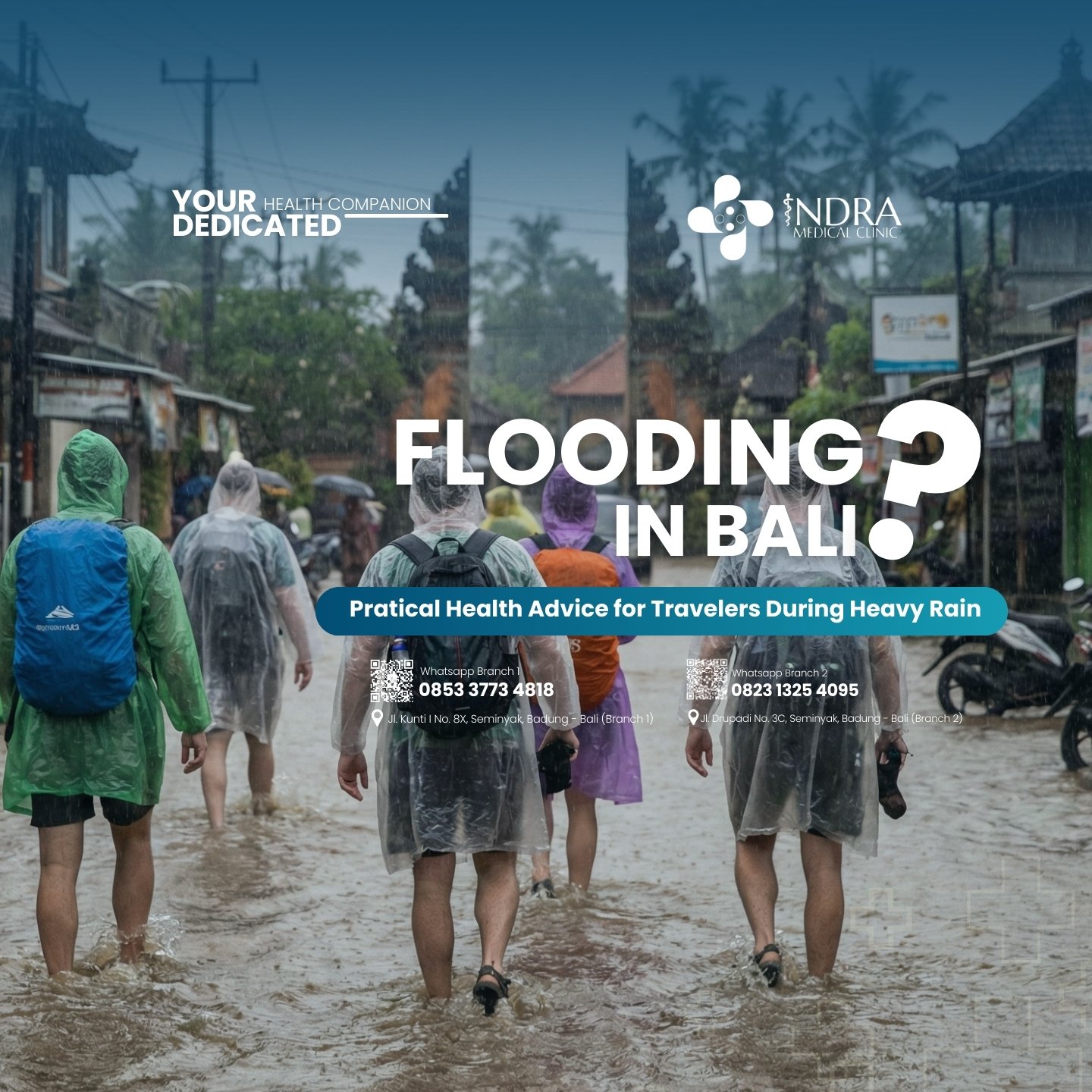
Bali’s rainy season can bring intense rainfall that occasionally leads to localized flooding, road closures, and disruptions to daily activities—especially in low-lying or high-traffic areas. For travelers and expatriates, flooding is not only an inconvenience but also a health risk if proper precautions are not taken.
At Indra Medical Clinic, we frequently manage health issues related to heavy rain and flooding. This article provides practical medical guidance to help you stay safe and healthy during these conditions.
Health Risks Associated With Flooding in Bali
1. Water-Borne and Food-Borne Infections
Floodwater may be contaminated with bacteria, viruses, and parasites from sewage and runoff. Exposure can occur through skin contact, accidental ingestion, or contaminated food and water.
Possible symptoms include:
Diarrhea
Vomiting
Abdominal pain
Fever
Dehydration
Practical advice:
Avoid contact with floodwater whenever possible
Do not consume food or drinks exposed to floodwater
Drink only bottled or properly filtered water
Wash hands thoroughly after being outdoors
2. Skin Infections and Wound Complications
Small cuts or abrasions exposed to dirty water can quickly become infected.
Common signs of infection:
Redness or swelling
Pain or warmth around a wound
Pus or discharge
Fever
Prevention tips:
Cover any open wounds with waterproof dressings
Clean skin immediately after exposure to rain or floodwater
Seek medical care for worsening wounds
3. Leptospirosis and Other Flood-Related Illnesses
Leptospirosis is a bacterial infection associated with exposure to water contaminated by animal urine. It is more common during floods.
Symptoms may include:
High fever
Severe headache
Muscle pain (especially calves and lower back)
Nausea or vomiting
Red eyes
Early diagnosis and treatment are essential to prevent serious complications.
4. Increased Risk of Mosquito-Borne Diseases
Standing water after heavy rain increases mosquito breeding, raising the risk of dengue fever and other mosquito-borne illnesses.
Preventive measures:
Use insect repellent daily
Wear long sleeves and trousers when possible
Avoid areas with stagnant water
Use mosquito control devices indoors
5. Injuries and Accidents During Flooding
Slippery roads, poor visibility, and hidden obstacles increase the risk of falls, traffic accidents, and injuries—especially for motorbike riders.
Safety advice:
Avoid riding or walking through flooded areas
Use appropriate footwear with good grip
Delay travel if conditions are unsafe
When Should Travelers Seek Medical Attention?
You should consult a doctor in Bali if you experience:
Persistent diarrhea or vomiting
Fever after exposure to floodwater
Worsening wounds or skin infections
Severe fatigue or muscle pain
Symptoms suggestive of dengue or leptospirosis
Prompt medical care can prevent complications and reduce recovery time.
Practical Tips to Stay Healthy During Flooding in Bali
- Monitor local weather and flood warnings
- Keep essential medications easily accessible
- Avoid unnecessary travel during heavy rain
- Save emergency medical contacts in your phone
- Do not delay seeking care if symptoms appear
Stay Informed, Stay Safe in Bali
Flooding can happen unexpectedly, but many health risks are preventable with awareness and early action. By taking practical precautions and seeking timely medical care, travelers can reduce health risks and continue to enjoy their stay in Bali safely.
For trusted medical care during Bali’s rainy season, Indra Medical Clinic is here to support your health when you need it most.
Small actions can prevent major health issues