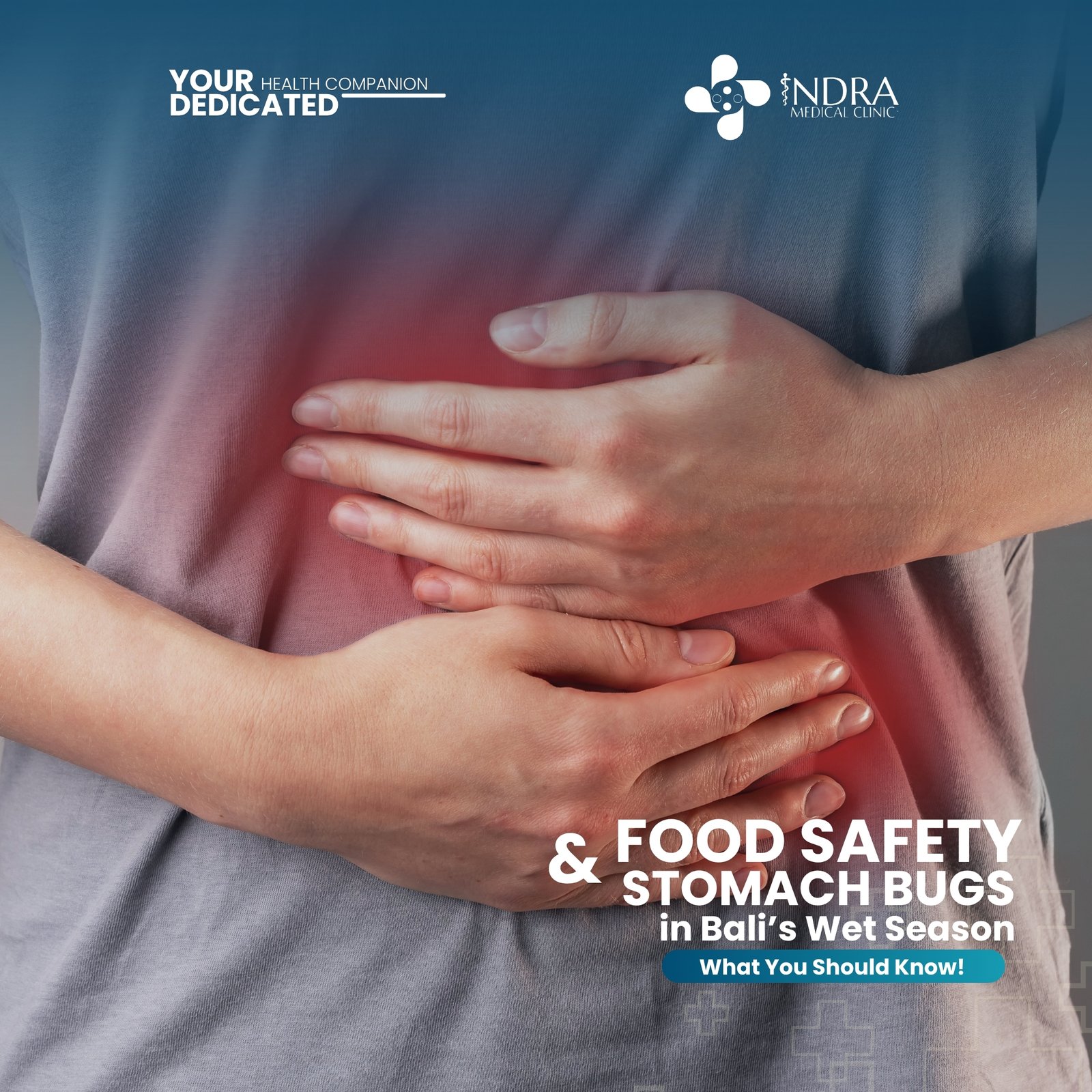
Bali’s wet season—typically from November to March—brings refreshing rain, cooler breezes, and greener landscapes. But it also brings something less pleasant: a higher risk of foodborne illnesses and stomach bugs.
At Indra Medical, we see a noticeable increase in patients with diarrhea, vomiting, abdominal cramps, and dehydration during this time of year. Most cases are mild, but some can become serious if not treated properly.
This guide will help you understand why stomach bugs are more common in the rainy season—and what you can do to stay healthy while enjoying your time in Bali.
Why Stomach Bugs Increase During the Wet Season
Rainy conditions create an environment where bacteria and viruses thrive. Here’s what happens:
- Higher Humidity = Faster Bacterial Growth
Warm and moist conditions allow bacteria such as E. coli, Salmonella, and Campylobacter to multiply quickly, especially on improperly stored food. - Street Flooding & Water Contamination
Heavy rain can cause runoff water to mix with food preparation areas or wash contaminants into wells and food stalls. - Power Outages Affect Refrigeration
Intermittent electricity can spoil meat, seafood, and dairy products before people realize it. - Travelers’ Stomachs Are More Sensitive
Even a small change in local water, oil, or spice levels can trigger digestive upset in visitors.
Food Safety Tips for Bali’s Wet Season
1. Choose Freshly Cooked Foods
Hot meals are safer than pre-made or room-temperature dishes.
Pick places where food is cooked in front of you.
2. Be Careful With Ice & Raw Foods
Avoid ice from unknown sources.
Be cautious with raw salads unless you trust the establishment.
3. Check Cleanliness of Food Stalls
Good signs:
Busy stall (high turnover = fresher food)
Clean cooking area
Food covered from flies
4. Stay Hydrated With Safe Water
Drink:
Bottled water
Filtered water from reputable restaurants
Rehydration salts if you’re sweating a lot
5. Wash Your Hands Before Eating
Hand hygiene is still the simplest and most effective protection.
Common Stomach Bugs in Bali’s Wet Season
Visitors often experience:
- Traveler’s Diarrhea – Bali Belly
Usually caused by bacteria. Symptoms include watery stools, cramps, nausea.
- Viral Gastroenteritis (“Stomach Flu”)
Highly contagious; symptoms include vomiting, fever, body aches.
- Food Poisoning
Often from spoiled seafood, undercooked chicken, or contaminated sauces.
Most cases improve within 24–72 hours with proper care.
When You Should See a Doctor
Visit or Call Indra Medical Clinic immediately if you experience:
-
Persistent vomiting
-
Diarrhea lasting more than 24 hours
-
Blood in stool
-
Severe abdominal pain
-
High fever
-
Signs of dehydration (dry mouth, dizziness, reduced urination)
Delaying treatment can lead to complications, especially in Bali’s hot and humid weather.
How Indra Medical Clinic Can Help
We provide:
- Rapid assessment of dehydration
- IV rehydration if needed
- Safe, effective medications for infections
- Stool testing for more severe cases
- Follow-up care until full recovery
Our goal is to help you recover quickly so you can enjoy Bali without worry.
Final Tips for Staying Healthy During the Wet Season
Eat at places with good reviews and high customer turnover
Don’t ignore early symptoms
Always carry hand sanitizer
Keep ORS (oral rehydration salts) with you
Rest when you feel unwell
Staying healthy in Bali is easy with a bit of awareness—especially during the wet season. And if stomach problems do arise, Indra Medical Clinic is here to take care of you every step of the way.
Remember: Not every stomach upset is serious, but dehydration can become dangerous fast in the tropics.