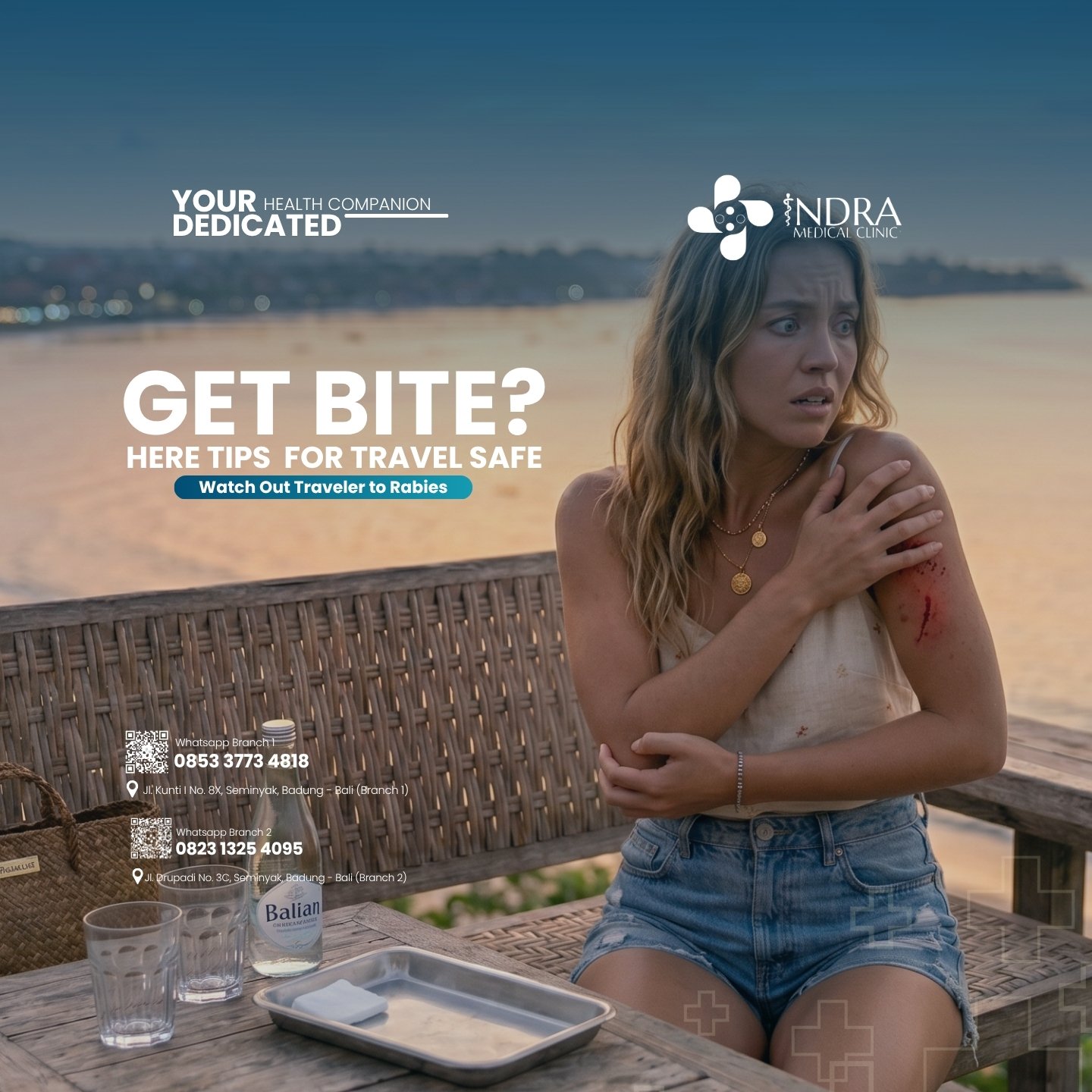
Animal bites may seem minor at first, but they should never be ignored during travel. Rabies is a serious viral infection that affects the nervous system and can become fatal once symptoms appear.
Travelers visiting tropical destinations should understand the importance of avoiding animal bites and knowing what to do in an emergency.
How Rabies Spreads
Rabies is commonly transmitted through:
- Dog bites
- Monkey scratches or bites
- Cat bites
- Contact with infected saliva through broken skin
In Bali, monkey interactions at tourist attractions can increase the risk of exposure.
Symptoms of Rabies
Rabies symptoms may not appear immediately. Early signs can include:
- Fever
- Headache
- Fatigue
- Tingling around the wound
As the disease progresses, symptoms may become severe, including:
- Difficulty swallowing
- Anxiety
- Muscle spasms
- Confusion
- Paralysis
Immediate medical care after exposure is extremely important.
What Should You Do After an Animal Bite?
Wash the Wound Immediately
Clean the wound thoroughly with soap and running water for at least 15 minutes.
Apply Antiseptic
Use antiseptic solution if available.
Seek Medical Care Quickly
A doctor may recommend rabies vaccination or additional treatment depending on the exposure risk.
Avoid Delaying Treatment
Do not wait for symptoms to develop.
How to Prevent Rabies During Travel
- Avoid touching stray animals
- Supervise children around animals
- Do not feed monkeys or wildlife
- Stay calm around animals
- Seek medical advice before travel if engaging in outdoor activities
Why Fast Action Matters
Rabies is preventable when treated early after exposure. Immediate wound care and prompt medical evaluation are critical steps for safe travel.
If you experience an animal bite or scratch during your trip, seek medical attention as soon as possible.
Rabies is preventable when treated early after exposure. Immediate wound care and prompt medical evaluation are critical steps for safe travel.