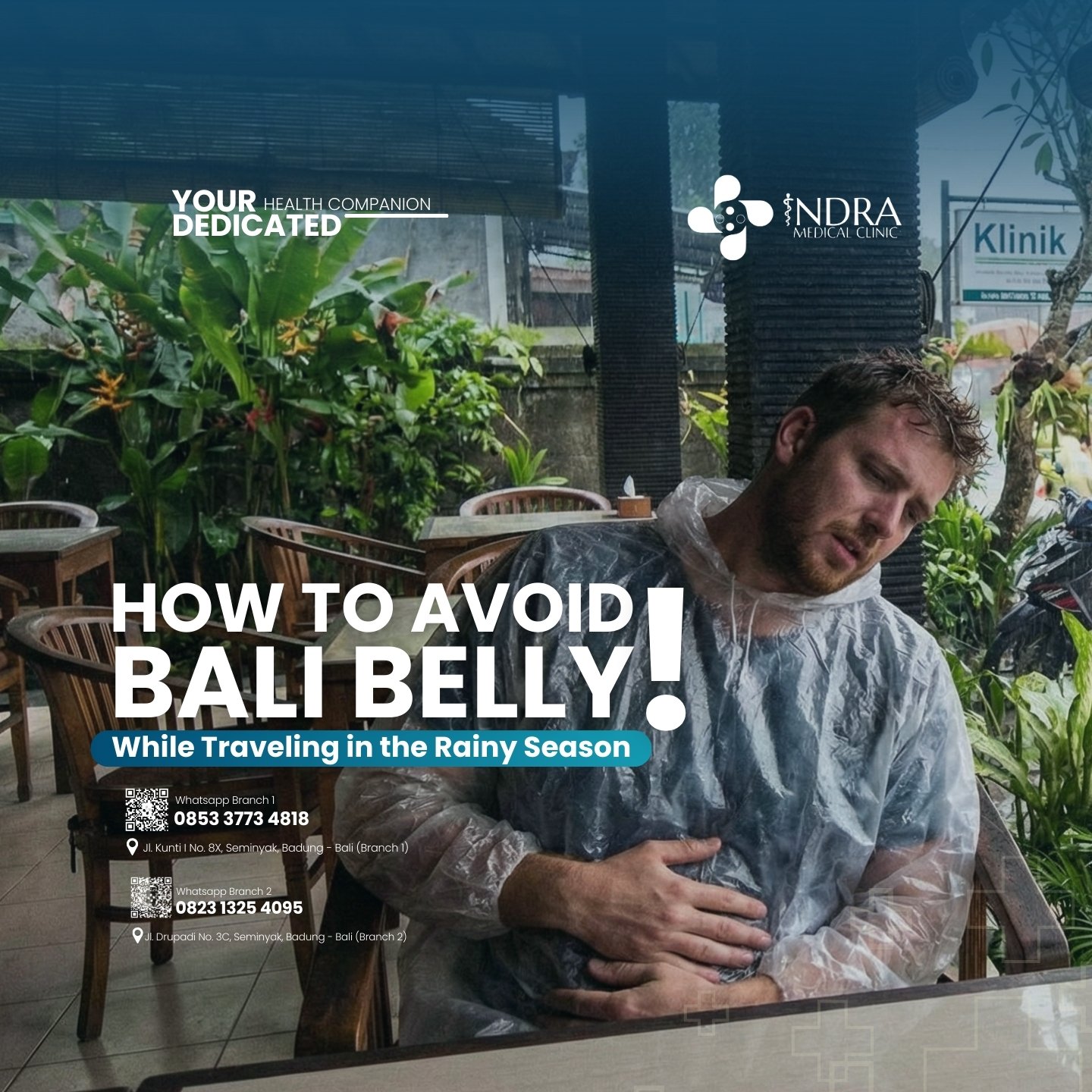
Traveling to Bali during the rainy season is an incredible experience—lush landscapes, cooler temperatures, and fewer crowds. However, this period also brings conditions that can increase the risk of traveler’s diarrhea, commonly known here as “Bali Belly.” At Indra Medical Clinic, we often treat visitors and residents with symptoms of gastrointestinal upset during the wet months. This article provides practical, medically grounded advice to help you avoid Bali Belly and stay healthy throughout your trip.
What Is Bali Belly and Why It’s More Common in the Rainy Season
“Bali Belly” refers to gastrointestinal infection or irritation that causes diarrhea, nausea, vomiting, and abdominal cramps among travelers. These symptoms are most often caused by bacteria, viruses, or parasites found in contaminated food or water. During Bali’s rainy season, rising humidity and occasional flooding can increase contamination risks in food preparation and water sources.
Understanding these risks helps you take intentional steps to protect your health.
Smart Water and Hydration Choices
Drink safe water only:
Bottled water with an intact seal is the safest option in Bali.
Avoid tap water entirely—even for brushing teeth or making ice unless you are certain it comes from purified sources.
Why this matters:
Floodwater and rain runoff can carry bacteria into water systems and disrupt local sanitation. Choosing sealed or properly filtered water dramatically reduces exposure to pathogens.
Hydration tip:
Stay well-hydrated throughout the rainy season. Dehydration can worsen symptoms if you encounter Bali Belly—seek electrolyte drinks or oral rehydration solutions when needed.
Careful Food Choices Reduce Risk
Food safety is one of the most effective ways to prevent Bali Belly:
Choose cooked, hot foods:
Meals that are freshly cooked and served hot are less likely to be contaminated than lukewarm or pre-prepared dishes.
Fruit and raw foods:
Avoid salads or fruits washed in untreated water. If you want fresh fruit, select items you can peel yourself (such as bananas or oranges).
Busy, reputable places:
Dining at busy restaurants or warungs with high turnover generally means fresher food and better hygiene practices.
Hand Hygiene: A Simple but Powerful Defense
Your hands are one of the most common ways bacteria transfer from surfaces to your mouth. Frequent hand hygiene is crucial:
Wash hands with soap and clean water before eating and after using the restroom.
Use alcohol-based hand sanitizer when soap and water aren’t available.
Good hand hygiene is a top risk-reduction strategy during the rainy season.
When to Be Extra Cautious
Rainy conditions can sometimes strain local kitchens and food handling standards, especially in informal settings or during heavy downpours. Street food can still be enjoyable—but choose vendors with visible hygiene practices, fresh cooking, and high customer turnover to limit your risk.
What to Do If You Start Feeling Unwell
Even with precautions, Bali Belly can occur. Early management helps prevent complications:
Hydrate immediately:
Sip bottled water or oral rehydration solutions frequently to counter fluid loss.
Watch for warning signs:
Seek medical care promptly if you experience persistent high fever, severe abdominal pain, blood in stool, or signs of dehydration such as dizziness or dark urine.
Indra Medical Clinic provides professional evaluation, rehydration support, and appropriate treatment if symptoms strike during your stay.
Stay Healthy and Make the Most of Your Trip
With mindful choices about water, food, and hygiene, most travelers can avoid Bali Belly and enjoy a healthy, memorable visit—even in the rainy season. At Indra Medical Clinic, our team is ready to support your health during your stay in Bali—whether you need preventive advice or medical care.
One careful choice can prevent days of discomfort