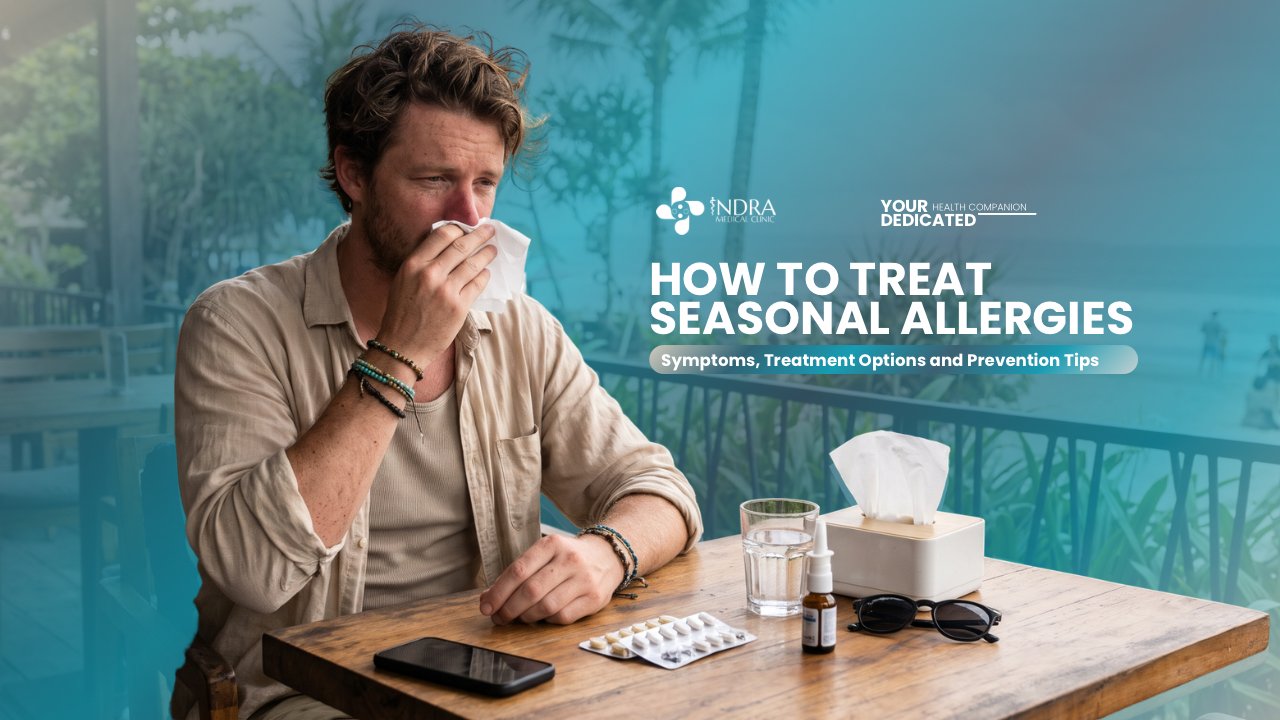
Sneezing repeatedly, having a runny nose, itchy eyes, or experiencing constant nasal congestion can make everyday activities uncomfortable. These symptoms are commonly associated with seasonal allergies, also known as allergic rhinitis or hay fever.
Seasonal allergies occur when the immune system reacts to environmental allergens, such as pollen. However, in tropical destinations like Bali, allergies can also be triggered by house dust mites, mould, pet dander, and other environmental factors throughout the year.
Understanding your triggers and choosing the right treatment can help control symptoms and improve your quality of life.
What Are the Common Symptoms of Seasonal Allergies?
Allergic rhinitis occurs when exposure to an allergen triggers inflammation in the nasal passages.
Common symptoms include:
Repeated sneezing.
Runny nose with clear nasal discharge.
Nasal congestion or a blocked nose.
Itchy nose, throat, or roof of the mouth.
Red, itchy, and watery eyes.
Postnasal drip and occasional coughing.
Reduced sense of smell.
Symptoms may develop shortly after exposure to an allergen and can persist as long as exposure continues.
Unlike a typical cold, allergic rhinitis generally does not cause fever. Itching of the nose and eyes is also particularly suggestive of an allergic reaction.
What Triggers Allergic Rhinitis?
Common environmental triggers include:
- Pollen: Trees, grasses, and weeds can release pollen that causes seasonal allergic symptoms.
- House dust mites: Microscopic organisms commonly found in mattresses, pillows, carpets, and upholstered furniture.
- Mould: Damp environments and poorly ventilated rooms can encourage mould growth.
- Pet dander: Proteins found in animal skin flakes, saliva, and other secretions can trigger allergic reactions.
- Airborne irritants: Smoke, pollution, strong fragrances, and dust can irritate the nasal passages and worsen existing symptoms, although they are not necessarily allergens.
In Bali’s tropical environment, indoor allergens such as dust mites and mould may be relevant throughout the year, even when pollen levels are not seasonal.
10 Ways to Treat and Prevent Seasonal Allergies
1. Identify and Avoid Your Triggers
Pay attention to when your symptoms become worse. For example, symptoms may increase after cleaning, spending time outdoors, entering dusty rooms, or being around pets.
Identifying patterns can help you reduce unnecessary allergen exposure.
2. Use Antihistamines
Antihistamines help block histamine, a chemical involved in allergic reactions.
Common options include second-generation antihistamines such as: Fexofenadine.
These medicines can help relieve sneezing, itching, and a runny nose. Some may still cause drowsiness, so check the product information and consider your activities before taking them.
3. Consider Corticosteroid Nasal Sprays
Intranasal corticosteroids help reduce inflammation inside the nasal passages.
Examples include fluticasone and mometasone.
They are particularly useful for persistent or moderate-to-severe nasal symptoms, including congestion. Regular and correct use is important because their full benefit may take several days to develop.
4. Rinse Your Nose With Saline
Saline nasal sprays or irrigation can help remove mucus, allergens, and irritants from the nasal passages.
For nasal irrigation, use sterile, distilled, or previously boiled and cooled water. Do not use untreated tap water.
5. Keep Your Bedroom Clean
Dust mites can accumulate in mattresses, pillows, bedding, and carpets.
Wash bedding regularly, clean surfaces with a damp cloth, and consider allergen-resistant mattress and pillow covers.
6. Reduce Indoor Humidity and Mould
Damp environments can encourage mould growth.
Keep rooms well ventilated, address water leaks, clean visible mould safely, and consider appropriate dehumidification where necessary.
7. Shower After Outdoor Activities
Pollen and other airborne particles can collect on your skin, hair, and clothing.
Showering and changing clothes after spending time outdoors may help reduce continued exposure.
8. Avoid Smoke and Strong Fragrances
Cigarette smoke, incense, perfumes, and other strong fragrances can irritate sensitive nasal passages.
Reducing exposure may help prevent additional irritation and worsening symptoms.
9. Use Eye Drops When Necessary
If allergies cause itchy or watery eyes, appropriate antihistamine eye drops may help.
Avoid rubbing your eyes, as this can increase irritation. Seek medical advice if you experience eye pain, light sensitivity, or changes in vision.
10. Seek Medical Advice if Symptoms Persist
If symptoms continue despite appropriate treatment, a doctor can assess whether you have allergic rhinitis, non-allergic rhinitis, sinusitis, or another condition.
Allergy testing may be considered when the diagnosis is uncertain or identifying a specific allergen would change management.
For selected patients with confirmed allergies, allergen immunotherapy may be an option under specialist supervision.
When Should You See a Doctor?
Consider medical assessment if you experience:
Persistent nasal congestion affecting sleep.
Frequent sneezing or nasal symptoms that interfere with daily activities.
Symptoms that do not improve with appropriate over-the-counter treatment.
Recurrent sinus discomfort or facial pressure.
Reduced sense of smell.
Wheezing, persistent coughing, or worsening asthma symptoms.
Seek emergency medical attention if you develop signs of a severe allergic reaction, including difficulty breathing, throat or tongue swelling, fainting, or sudden circulatory symptoms.
Final Thoughts: Control Your Allergies Before They Disrupt Your Day
Seasonal allergies and allergic rhinitis can affect sleep, concentration, work, and everyday comfort. Fortunately, identifying triggers and using appropriate treatment can significantly improve symptom control.
Do not let constant sneezing and nasal congestion interfere with your daily life