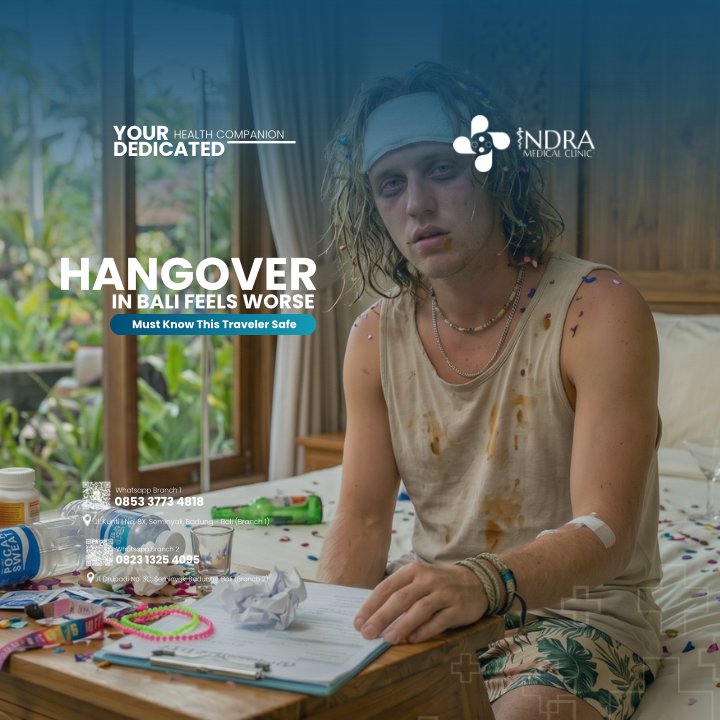
Bali is a paradise for travelers, known for its beautiful beaches, vibrant nightlife, and unforgettable experiences. However, many visitors also face an unpleasant reality—waking up with a hangover that feels far worse than expected. This guide explains why it happens and shares evidence-based tips to help you recover safely and enjoy your time in Bali.
Why Does a Hangover in Bali Feel So Much Worse?
If you wake up in Bali thinking, “This is the worst hangover of my life,” you are not exaggerating. Several unique factors combine to make post-drinking recovery particularly brutal here.
- The “Supercharged” Dehydration Effect
Located just 8 degrees south of the equator, Bali’s hot, humid climate makes you sweat profusely all day long. Alcohol is a potent diuretic, making you urinate more. When you combine these two forces, you are losing fluids from both ends. Crucially, many tourists arrive after long-haul flights already in a mildly dehydrated state. If they drink heavily that first night, they wake up severely depleted. A typical Bali drinking session can easily lead to a fluid deficit of 2 to 3 liters—which is why that headache is so intense. - Inconsistent Alcohol Quality
Bali’s beverage market can be a minefield. While imported spirits are generally safe, local spirits and cocktails vary wildly in quality. Arak (local palm wine) ranges from artisan-quality to cheap versions loaded with higher-order alcohols (congeners)—toxic byproducts of fermentation that significantly worsen hangovers. Even more concerning, adulterated (fake) alcohol is a real issue in tourist areas; bottles that look like premium vodka or whiskey may contain cheaper local spirits mixed with industrial alcohol. Additionally, bars often use heavy syrups and sugars to mask poor-quality spirits, creating a “sugar crash” that compounds the dehydration. - Your Body is Already Running on Empty
Most people drinking in Bali are simultaneously dealing with: jet lag, sun exposure, sleep deprivation, and high-adrenaline travel activities. Your body is already in a state of physiological stress; alcohol is simply the final straw. - Tropical Heat Amplifies Fluid Loss
The dehydrating effects of alcohol are significantly magnified in tropical environments. Drinking in 30°C+ outdoor settings (which most Bali beach clubs and rooftop bars are) exacerbates fluid loss through sweat. Many tourists drastically underestimate how quickly they lose water when consuming alcohol under the intense tropical sun.
Can You Tell the Difference? Hangover vs. Heatstroke
This is a unique danger in Bali: the symptoms of a severe hangover and heatstroke overlap, but the treatments are completely different.
| Feature | Hangover | Heatstroke |
|---|---|---|
| Onset | The morning after drinking | During or immediately after sun exposure/activity |
| Core Symptoms | Headache, nausea, sensitivity to light/sound | Profuse sweating, pale/clammy skin, muscle cramps |
| Body Temperature | Usually normal | May be elevated |
If symptoms overlap, or if you are unsure, seek medical help immediately.
The Science-Backed Protocol: A Step-by-Step Hangover Fix
Phase 1: The “Golden Hour” – First 60 Minutes After Waking
The Hydration Trinity:
Fresh Young Coconut Water: Bali’s “natural IV drip.” It is rich in potassium and magnesium, which replenish electrolytes efficiently. Order one via Gojek to your villa for under $2 USD. (Note: it takes 2-3 coconuts and a couple of hours to fully rehydrate, so start early).
Pocari Sweat: This Japanese sports drink is available in every convenience store in Bali. It has a scientifically formulated electrolyte balance that precisely mimics what you lose through sweating and drinking.
Plain Mineral Water: Start by drinking at least 500ml of still water.
Crucial: Hold off on coffee for at least an hour—caffeine is a diuretic and will worsen dehydration.
Dietary Advice:
If you can eat, start with plain crackers (like Kerupuk or saltines) or dry toast.
A banana is excellent—easy to digest and replenishes lost potassium.
Avoid heavy, greasy foods; your sensitive stomach cannot handle them right now.
Pain Relief: Paracetamol (Acetaminophen) is gentler on the alcohol-irritated stomach lining compared to Ibuprofen (NSAIDs). Apply a cold compress to your forehead or the back of your neck to constrict blood vessels and ease the throbbing.
Phase 2: If Symptoms Persist (Advanced Home Care)
Oral Rehydration Salts (ORS): If plain water and sports drinks aren’t enough, pharmacies sell ORS sachets. These deliver the exact WHO-recommended ratio of glucose and sodium to maximize water absorption in your intestines.
Phase 3: The Severe Hangover – When to Seek Help
Okay to stay at home:
Headache but able to keep down fluids.
Nausea but no repeated vomiting.
Dizziness only when standing up quickly.
Symptoms gradually improve through the morning.
Consider IV Drip Therapy:
Repeated vomiting making it impossible to keep water down.
Dizziness even while lying flat.
No improvement after 8 hours.
You have a flight, surf lesson, or event scheduled today.
You are completely unable to function.
Dark urine or no urine output.
Why IV Therapy Works So Fast:
A 500 ml IV fluid bolus rapidly corrects the massive fluid deficit (the primary cause of the headache and dizziness).
IV anti-emetics stop the vomiting cycle within minutes.
Gastric mucosa protectants reduce stomach acid irritation.
B-vitamins replenish nutrients heavily depleted by alcohol.
Most patients report headache relief within 20-30 minutes and significant nausea improvement within 45-60 minutes—far faster than suffering for 6-10 hours at home. Indra Medical Clinic provides 24-hour mobile IV services across all major tourist areas in Bali.
The best hangover treatment is prevention. Stay hydrated, eat before drinking, pace your alcohol intake, and get enough rest